

Is oil the real weapon in the Libyan conflict?
Beyond the military clashes, an analysis of the energy stakes shaping Libya’s political and economic future.
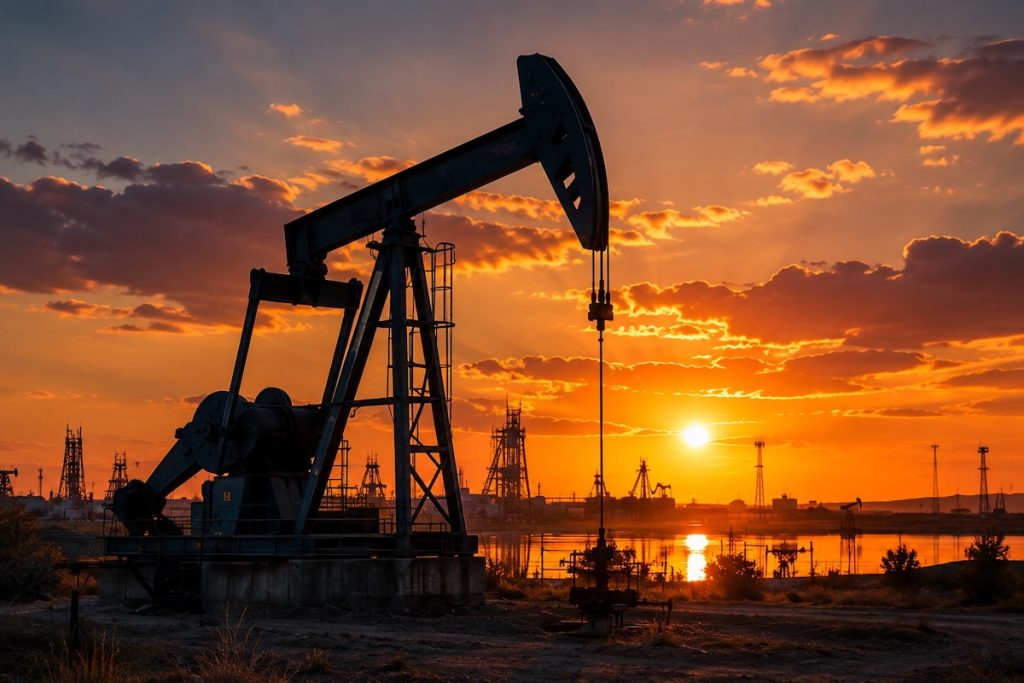
The conflict that has torn Libya apart since the fall of Muammar Gaddafi in October 2011 continues to generate a completely chaotic situation, where political, military and economic issues intertwine, with the country’s substantial oil and gas reserves at its heart.
Chaos. A single word to describe the situation that has prevailed in Libya since the first riots that broke out in February 2011, in the wake of Tunisia. To find a way out of the civil war that has raged in the country ever since, pitting a multitude of actors against one another, a long and difficult process of national reconstruction has been set in motion. A complicated equation with several unknowns, but whose key—whatever perspective one takes—is oil.
Oil reserves held hostage
Libya’s oil reserves (48 billion barrels), the largest in Africa, place the country 9th in the world. The country also has significant natural gas fields (1,600 billion cubic metres). Despite this, oil production—whose export accounts for almost all state revenue—has fallen from 1.65 million barrels per day in 2010 to an average of 250,000 today, a staggering drop of 85%. In the meantime, the price of oil has been halved. Libya is on the brink of financial asphyxiation.
Why such a situation? In the conflict that has lasted five years in Libya, oil has been taken hostage. The country has six terminals, five of them in the east: Sidra, Brega, Ras Lanouf, Brega (the “oil crescent”) and Tobruk. A concentration that fuels the ambitions of the various factions.
Oil, the key to resolving the Libyan conflict
The current Libyan government based in Tripoli, formed with difficulty in March 2016 and led by Fayez al-Sarraj with the support of Western countries and the UN, must contend with several armed groups, large and small, which use oil facilities as leverage to obtain money from the state and, above all, to secure a strategic advantage. The Islamic State group, which occupied the Sirte region for two years before being recently expelled, pursued a scorched-earth policy, destroying facilities in an attempt to bring the country to its knees.
But the government’s main rival is General Khalifa Haftar, head of the Libyan National Liberation Army (LNA), who seized the “oil crescent” last September. An action that gives him an undeniable political and military advantage—60% of Libyan oil is exported from this region—but not necessarily an economic one, because any attempt on his part to export oil without working with the Tripoli government—which he himself considers illegitimate—would be deemed illegal by the UN and would deter potential customers worldwide. Over the coming months, resolving the country’s political and economic situation will therefore depend largely on the nature and quality of relations between General Haftar and Fayez al-Sarraj’s government—with, between the two rivals, still and always, the weapon of oil.
IN BRIEF
FRENCH
5 MIN READ
GEOPOLITICS • ENERGY
CONTENT TYPE
Investigative and analytical article
THE CHALLENGE
Making a complex geopolitical conflict understandable by showing how energy, political and military stakes revolve around a single strategic resource.
SHARE